
Fragrance Facts (printer-friendly version)
Scent sells, making fragrance a multibillion-dollar industry.1, 2 What many don’t know, however, is that scented products are a source of indoor air pollution and can have serious health effects.3-7 One key to breathing easier at school? Go fragrance free. Read on to learn more.
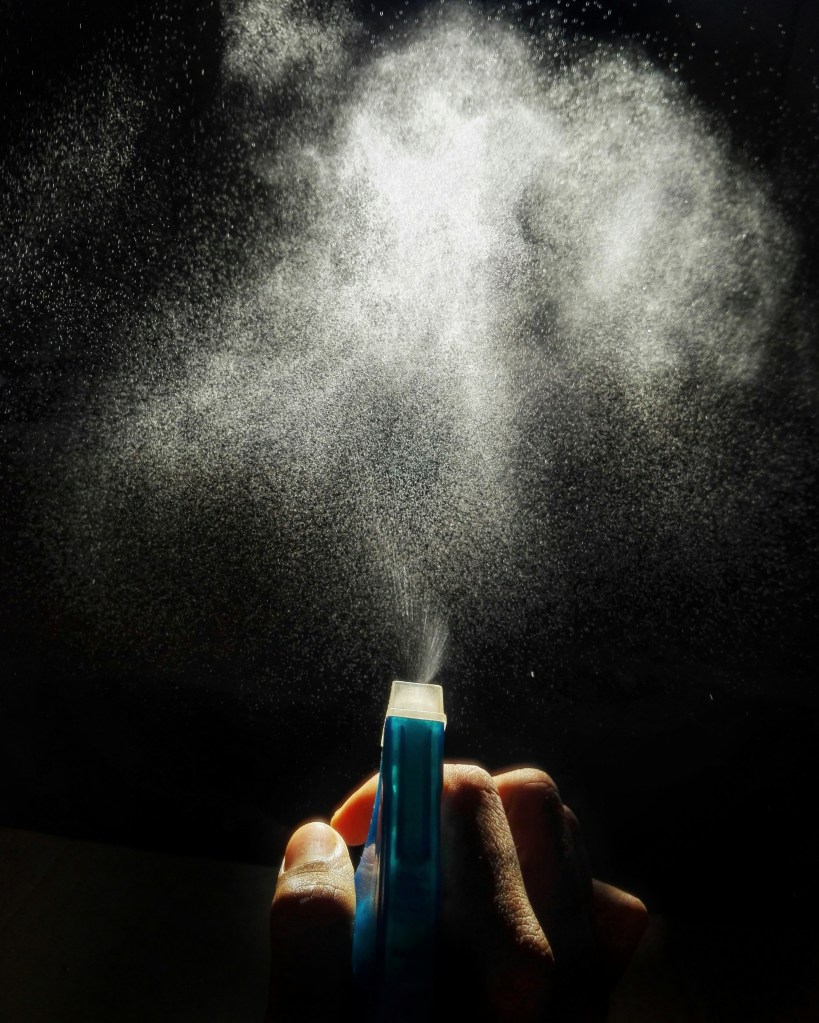
There’s more to fragrance than you may know
Fragrances are created by mixing synthetic chemicals and/or natural substances to create a particular scent. The International Fragrance Association lists nearly 4,000 ingredients that are used to make fragrance mixtures for personal care products, home care products, and fine fragrance.8
A single scented product may contain hundreds of different fragrance chemicals, some of them hazardous.9 Many people are sensitive (allergic) to fragrance. This doesn’t mean they’re allergic to smells. They react to the chemicals in the fragrance. For example, they may react to an unlit scented candle on the other side of a room, yet be fine sniffing a vanilla bean or flower.
Essential oils are sometimes used to create natural fragrances. Although essential oils are made from natural substances, such as plants and seeds, they’re concentrated much more than you’d find in nature and can have serious health effects for some.10, 11
You may be surprised where fragrance is found
Fragrance isn’t only in obvious scented products like air fresheners, perfume, cologne, and candles. Some fragrance chemicals are used in artificial food flavorings.12 Fragrance is also used in many soaps; lotions; hand sanitizers; bath products; shaving creams; makeup products; lip balms; laundry products; feminine hygiene products; cleaning and disinfecting products; trash bags; diapers; sunscreens; hair products; dental floss; and scented art supplies, toys, clothing, and more.
Products labeled “unscented” can contain fragrance chemicals, too. Manufacturers use them to mask the odor of other ingredients in the product. To avoid fragrance chemicals, seek out “fragrance-free” products.10
The simplest way to find out if a product contains fragrance is to read the ingredients on its label. (Note, however, some products aren’t required to list all ingredients.) You might see the name of a fragrance chemical, such as linalool or limonene. More often, it will simply say “fragrance” or “parfum.”13 Due to U.S. trade secret laws, companies aren’t required to disclose specific fragrance ingredients, not even to federal regulatory agencies. Therefore, the fragrance industry is basically self-regulated.14
Concerns about fragrance and health
Fragrance chemicals enter the body when they’re breathed in, absorbed by skin, or ingested. Once they’re inside the body, they can impact any organ or body system, including the brain.15
Ingredients in fragrance can lead to a wide range of health effects. Some chemicals found in scented products are known to disrupt hormones and cause cancer.16, 17 Fragrance can also trigger migraines and asthma attacks.18 Some people experience milder symptoms, such as a runny nose, irritated eyes, itchy skin, or sore throat. Other health effects may not show up until years later and be chronic, such as damage to the nervous system and reproductive problems.4, 9, 10, 15, 19-21 Fragrance chemicals can also cross the placenta of pregnant women, potentially affecting the development of the unborn baby.15
A growing concern is the tiny particles, called particulate matter, that certain kinds of fragrance chemicals add to the air, even when they’re used on a surface (not sprayed).5, 7, 22 These particles can be so small they’re inhaled deep into the lungs. From there, the tiniest particles can enter the bloodstream. They can cause heart attacks, strokes, decreased lung function, and other respiratory problems.23 They can also contribute to diabetes, nervous system problems, and lung cancer.24
Some fragrance chemicals are known sensitizers. This means that repeated exposure to them can cause sensitivities (allergies) that can become more severe with subsequent exposures.25, 26 Given that fragrance is nearly unavoidable in our society, this can have huge negative impacts for those who develop fragrance sensitivities. One study found that, in the U.S., more than 34% of people reported health problems when exposed to fragrance products.27
Fragrance affects more than just those who use scented products, themselves. This is because some compounds in fragrance easily evaporate into the air.10, 15 People have compared this to the issue of second-hand smoke. When someone puts a substance into the air, it’s not a choice for others nearby to opt out of exposure, especially in schools where students and staff are required to remain in certain spaces much of the day. Even masks don’t prevent exposure because fragrance in the air contacts skin and eyes.
Children and people with asthma, allergies, and other health problems are most at risk
As with other chemical exposures, children can face greater risks from exposure to fragrance chemicals than adults. This is because their bodies are still developing. Their noses and lungs don’t filter as well, their skin is more permeable, their bodies are less able to get rid of toxins, and they breathe proportionately more air than adults. They also behave differently, like putting their hands in their mouths and spending time on the floor, where scented cleaners may have been used or fragrance chemicals from other products may have settled.28-32
People with asthma, allergies, and other health problems also face an increased risk from fragrance.4, 10 This is significant because more than 40% of school-aged children and adolescents have a chronic health condition.33 One in five children had a diagnosed seasonal allergy in 2024, and in Wyoming, nearly one out of ten children and adults has asthma.34, 35 Asthma causes kids to miss more than 13.8 million school days per year nationwide.36
In a study of adults, nearly two-thirds of those with asthma reported negative health effects from fragrance from air fresheners, products worn by others, laundry products coming from a dryer vent, or being in a room previously cleaned with scented products. More than 62% of the health effects from fragrance that they reported met the criteria for a disabling condition under the Americans with Disabilities Act. This makes fragrance not only a health threat to some, but also a barrier to accessibility. For example, nearly 40% couldn’t use a public restroom if it had an air freshener in it. Many had also missed work or lost their job because of exposure to scented products where they worked.4
Special concerns about air fresheners
Air fresheners are often used to cover up unpleasant odors that are really a sign of poor indoor air quality. For example, mustiness can indicate a mold problem or a mechanical issue with the ventilation system at school. Air fresheners don’t solve the problem. They make indoor air quality worse by adding more chemicals, and others have no choice but to breathe them.37
A study conducted by a nonprofit organization found that 86% of the common air fresheners they tested contained phthalates. This included air fresheners advertised as unscented or all-natural. Phthalates are a type of hazardous chemical known to interfere with hormones and cause reproductive problems and birth defects. Phthalates weren’t listed as an ingredient in any of the air fresheners tested.38
Many types of air fresheners, including plug-ins and automatic spray air fresheners, are a near-continuous source of indoor air pollution. They don’t fade away over time the way many other scented products do. Instead of using them, investigate odor problems and address their source. Some odor problems can be solved by simply opening a window to let in fresh air.
As mentioned previously, air fresheners can also prevent those who are sensitive to fragrance from being able to access spaces they need to for daily life activities. This includes work and school. And because many ventilation systems recirculate a portion of the air within a building, air freshener use in one room can impact a much larger area.
What about natural fragrances and essential oils?
Natural fragrances and essential oils are not necessarily safer. The term “natural” isn’t regulated in the U.S. for many types of products, including those with fragrance. This means companies can label these products natural even if they aren’t.
Also, not all natural products are safe. Some essential oils release compounds into the air that can cause a range of health effects, including developmental problems and damage to the nervous system.11, 39 Further, compounds from natural fragrances (and fragrance chemicals) can react with other molecules in the air to form additional dangerous substances, including known carcinogens like formaldehyde.40-42 Burning incense also creates indoor air pollution from the compounds it releases and harmful particles it puts in the air.7
What can I do?
- Go fragrance free. Especially avoid wearing strongly scented products like perfume, cologne, after shave, body spray, or scented lotion at school or work.
- Create a fragrance-free policy for your school or district to keep air fresheners, diffusers, fragrance oils, incense, scented candles, scented cleaning and disinfecting products (including wipes), scented soap, scented hand sanitizer, and other scented products out of school facilities. The U.S. EPA recommends that schools have a policy against scented products in classrooms.36 The U.S. Centers for Disease Control and Prevention has its own fragrance-free policy that prohibits the use of scented products in all the spaces it rents, owns, or leases.43, 44
- When outdoor air is healthy (air pollution from wildfire smoke, traffic, and other sources is low), open windows to let in more fresh air.
- Prevent odors that might encourage people to use air fresheners or other scented products. Take out trash daily and place in outside dumpsters. Clean with non-toxic, fragrance-free products and vacuum daily.
- If your school has an odor problem, ask administrators and/or facilities personnel to investigate its source and correct any issues found. If needed, gather the support of parents and staff.
- Check that your school is properly maintaining its HVAC (heating, ventilation, and air conditioning) system, including changing filters regularly. Ask to increase the amount of outdoor air the system brings in if feasible. This reduces the concentration of indoor air pollutants in the building. Make sure that vents bringing air into the classroom aren’t covered by classroom items.45
- Baking soda absorbs odors and can work as a non-polluting room deodorizer. If needed, place an open box somewhere in the room out of reach of students.10 Make sure to locate it away from blowing air (fans, vents, or open windows) so the particles don’t enter the air.
- If odor problems remain, consider using an air purifier. Be sure to select one that doesn’t generate ozone, which is an air pollutant.45
- Share what you’ve learned with others and encourage them to go fragrance free!
References
- Jaganathan S, Rajadurai KR, Beaulah A, Mohan MM, Kalpana K, Rajesh S, Kennedy RR, Manivannan MI, Raja V. Present status and challenges in the perfume industry: A review. Plant Science Today. 2026; 13(sp5): 1-7. https://doi.org/10.14719/pst.9113. Full text at https://www.proquest.com/openview/ddf696d3e79a954a98c8edb9b3373302/1?pq-origsite=gscholar&cbl=7681156, viewed 10/8/26
- Kristina Plevova, Stella Antoniotti, Alain Frix, Sylvain Antoniotti; A holistic vision for a sustainable fragrance industry. RSC Sustainability 2026; 4 (1): 21–27. https://doi.org/10.1039/d5su00680e. Also available at https://pubs.rsc.org/su/article/4/1/21/315811/A-holistic-vision-for-a-sustainable-fragrance, viewed 10/7/26
- Steinemann, A, “The fragranced products phenomenon: air quality and health, science and policy,” Air Quality, Atmosphere & Health 14, 235–243 (2021), https://doi.org/10.1007/s11869-020-00928-1, viewed 10/8/26
- Steinemann, A, “Fragranced consumer products: effects on asthmatics,” Air Quality, Atmosphere & Health, 11, 3–9 (2018), https://doi.org/10.1007/s11869-017-0536-2, viewed 10/8/26
- American Chemical Society, “Scented Cleaning Products Create Invisible Air Pollution,” 8/27/26, https://www.acs.org/pressroom/presspacs/2026/august/scented-cleaning-products-create-invisible-air-pollution.html, viewed 10/17/26
- U.S. Air Quality, “Common Air Pollution Sources,” 2/25/26, https://usairquality.us/guides/pollution-sources, viewed 10/17/26
- Gao, Fei, Tuan Vu, Michael Hedges, Sani Dimitroulopoulou, David Green, Adam Skillern, Benjamin Barratt, Diana Varaden, Frank J. Kelly, Sean Beevers, How routine fragrance product use elevates indoor PM2.5 exposure in London households, Environment International, Volume 215, 2026, 110471, ISSN 0160-4120, https://doi.org/10.1016/j.envint.2026.110471, viewed 10/17/26
- The International Fragrance Association, “About the IFRA Transparency List,”, https://ifrafragrance.org/transparency-list/about-the-ifra-transparency-list, viewed 10/8/26
- Steinemann, A, “Ten questions concerning air fresheners and indoor built environments,” Building and Environment, Volume 111, pp. 279-284 (2017) 111 (2017) 279-284, https://doi.org/10.1016/j.buildenv.2016.11.009. (https://www.sciencedirect.com/science/article/pii/S0360132316304334), viewed 10/9/26
- Children’s Environmental Health Network, “FAQs: Fragrances,” https://cehn.org/the-dangers-of-fragrances-especially-when-exposed-to-children/, viewed 10/8/26
- Nematollahi, N. and S.D. Kolev, A. Steinemann, “Volatile chemical emissions from essential oils,” Air Quality, Atmosphere & Health, 11, 949–954 (2018), https://doi.org/10.1007/s11869-018-0606-0, viewed 10/8/26
- Reshna K R, Sreerag Gopi, Preetha Balakrishnan, “Introduction to Flavor and Fragrance in Food Processing,” Flavors and Fragrances in Food Processing: Preparation and Characterization Methods, eds. Preetha Balakrishnan, Sreerag Gopi, published by American Chemical Society, 27 Dec 2022, Vol. 1433, pp. 1 – 19; https://pubs.acs.org/doi/abs/10.1021/bk-2022-1433.ch001, viewed 10/8/26
- Wnek, Dunsia. “Sensitive Skin? What You Should Know About Hypoallergenic Perfume,” Good Housekeeping, 9/9/26, https://www.goodhousekeeping.com/what-to-buy/beauty-products/a71857525/hypoallergenic-fragrance-allergens/, viewed 10/9/26
- B E Fisher; Scents and sensitivity. Environ. Health Perspectives. 1 December 1998; 106 (12): A594–A599. https://doi.org/10.1289/ehp.98106a594, viewed 10/8/26
- Bridges, B. (2002), Fragrance: emerging health and environmental concerns. Flavour Fragr. J., 17: 361-371. https://doi.org/10.1002/ffj.1106, full text at https://onlinelibrary.wiley.com/doi/pdf/10.1002/ffj.1106, viewed 10/8/26
- Cohen, Alison, Sarah Janssen, Gina Solomon. “Clearing the air: Hidden Hazards of air fresheners,” Natural Resources Defense Council Issue Paper, Sept. 2007, https://www.nrdc.org/sites/default/files/airfresheners.pdf, viewed 10/10/26
- European Commission’s Scientific Committee on Health and Environmental Risks (SCHER), Opinion on the report Emission of Chemicals by Air Fresheners. Tests on 74 Consumer Products Sold in Europe. January 2005. Adopted by Adopted by the SCHER during the 9th plenary of 27 January 2006. https://ec.europa.eu/health/ph_risk/committees/04_scher/docs/scher_o_026.pdf, viewed 10/17/29
- U.S. Centers for Disease Control & Prevention, “Controlling Asthma,” 8/28/26, https://www.cdc.gov/asthma/control/index.html, viewed 10/17/26
- Rádis-Baptista, G. Do Synthetic Fragrances in Personal Care and Household Products Impact Indoor Air Quality and Pose Health Risks? J Xenobiot. 2023 Mar 1;13(1):121-131. doi: 10.3390/jox13010010. https://pubmed.ncbi.nlm.nih.gov/36976159/, viewed 10/6/26
- Rose, Lynn and Carol Westinghouse primary authors, prepared in collaboration with the Toxics Use Reduction Institute at the University of Massachusetts Lowell, Cleaning for Healthy Schools Infection Control Handbook, Appendix A.3, pp. 9-10, updated 2020, https://www.informedgreensolutions.org/cleaning-for-healthier-schools-infection-control-handbook viewed 10/9/26
- Washington State Department of Health, “Classroom Cleaning Tips for Teachers,” http://www.doh.wa.gov/CommunityandEnvironment/Schools/EnvironmentalHealth/ClassroomCleaning, viewed 10/10/26
- U.S. EPA, “Sources of Indoor Particulate Matter (PM),” https://www.epa.gov/indoor-air-quality-iaq/sources-indoor-particulate-matter-pm#consumer, last updated 3/10/26, viewed 10/17/26
- U.S. EPA, “Health and Environmental Effects of Particulate Matter (PM),” 5/5/26, https://www.epa.gov/pm-pollution/health-and-environmental-effects-particulate-matter-pm, viewed 10/17/26
- American Lung Association, “Health Impact of Air Pollution – Health Effects of Particle Pollution,” https://www.lung.org/research/sota/health-risks, viewed 10/17/26
- Potera, C; Scented Products Emit a Bouquet of VOCs. Environ. Health Perspectives. 1 January 11; 119 ( 1): A16. DOI:10.1289/ehp.119-a16, https://www.researchgate.net/publication/49719183_INDOOR_AIR_QUALITY_Scented_Products_Emit_a_Bouquet_of_VOCs, viewed 10/8/26
- B E Fisher; Scents and sensitivity. Environ. Health Perspectives. 1 December 1998; 106 (12): A594–A599. https://doi.org/10.1289/ehp.98106a594, viewed 10/8/26
- Steinemann, A, Fragranced consumer products: exposures and effects from emissions. Air Qual Atmos Health 9, 861–866 (2016). https://doi.org/10.1007/s11869-016-0442-z, viewed 10/8/26
- U.S. EPA, “Children’s Unique Vulnerabilities to Environmental Hazards – Why Children May Be at Greater Risk than Adults,” last updated 9/8/26, https://www.epa.gov/children/childrens-unique-vulnerabilities-environmental-hazards, viewed 10/8/26
- National Institute of Environmental Health Sciences & U.S. EPA, “NIEHS/EPA Children’s Environmental Health and Disease Prevention Research Centers: Protecting Children’s Health for a Lifetime,” October 2013, http://www.niehs.nih.gov/health/assets/docs_f_o/niehsepa_childrens_environmental_health_and_disease_prevention_research_centers_508.pdf, viewed 10/10/26
- Physicians for Social Responsibility, “How Air Pollution Contributes to Lung Disease,” 2/25/11, http://www.psr.org/assets/pdfs/air-pollution-effects-respiratory.pdf, viewed 10/10/26
- Landrigan, P. J., “Children as a Vulnerable Population,” International Journal of Occupation, Medicine, and Environmental Health 17, 1 (2004): 175–77, https://pubmed.ncbi.nlm.nih.gov/15212221/, viewed 10/10/26
- Landrigan, P., “Environmental Health Threats to Children: A Look at the Facts,” INFORM, 2004, https://irp-cdn.multiscreensite.com/22c98fa0/files/uploaded/39849791-Environmental-Health-Threats.pdf, viewed 10/10/26
- U.S. EPA, “Children’s Unique Vulnerabilities to Environmental Hazards – Protecting Children Now Creates a Healthy Future,” last updated 9/8/26, https://www.epa.gov/children/childrens-unique-vulnerabilities-environmental-hazards, viewed 10/8/26
- U.S. EPA, October AsthmaCommunityNetwork.org Newsletter, 10/7/2026, https://content.govdelivery.com/accounts/USEPAIAQ/bulletins/42e28f1, viewed 10/7/26
- American Lung Association, “Current Asthma Demographics,” https://www.lung.org/research/trends-in-lung-disease/asthma-trends-brief/current-demographics, last updated 6/20/25, viewed 10/10/26
- U.S. EPA, “Sensible Steps to Healthier School Environments,” May 2026, p.6, https://www.epa.gov/system/files/documents/2026-05/sensible-steps-to-healthier-school-environments-may-2026.pdf, viewed 10/10/26
- University of Massachusetts Amherst Environmental Health and Safety, “Air Fresheners,” https://www.umass.edu/ehs/air-fresheners, viewed 10/6/26
- Cohen, Alison, Sarah Janssen, Gina Solomon. “Clearing the air: Hidden Hazards of Air Fresheners,” Natural Resources Defense Council Issue Paper, Sept. 2007, https://www.nrdc.org/sites/default/files/airfresheners.pdf, viewed 10/10/26
- U.S. EPA, “Toluene,” https://www.epa.gov/sites/default/files/2016-09/documents/toluene.pdf, updated July 2012, viewed 10/8/25
- Nazaroff, William W. and Charles J. Weschler, Cleaning products and air fresheners: exposure to primary and secondary air pollutants, Atmospheric Environment, Volume 38, Issue 18, 2004, pp. 2841-2865, https://doi.org/10.1016/j.atmosenv.2004.02.040. Viewed 10/8/26
- U.S. National Toxicology Program, Department of Health and Human Services, “Formaldehyde,” Report on Carcinogens, Fifteenth Edition, 12/21/21, https://ntp.niehs.nih.gov/sites/default/files/ntp/roc/content/profiles/formaldehyde.pdf, viewed 10/8/26
- U.S. EPA, “Facts about Formaldehyde,” last updated 3/30/26, https://www.epa.gov/formaldehyde/facts-about-formaldehyde, viewed 10/17/26
- Gleason-Allured, J., “Recent Policy Bans Fragrance in CDC Sites,” Perfumer & Flavorist, 5/19/10, https://www.perfumerflavorist.com/fragrance/regulatory-research/news/21885549/recent-policy-bans-fragrance-in-cdc-sites, viewed 10/9/26
- Invisible Disabilities Association, “US Centers for Disease Control Follows Fragrance-Free Policy,” https://invisibledisabilities.org/environmental-illness/cdc-fragrance-free-policy/, viewed 10/9/26
- U.S. EPA, “Sensible Steps to Healthier School Environments,” May 2026, p. 16, https://www.epa.gov/system/files/documents/2026-05/sensible-steps-to-healthier-school-environments-may-2026.pdf, viewed 10/10/26
Created October 2026

