Welcome to the May Wyoming Healthy Schools Newsletter! See below for Events, Opportunities, & Resources and our Diving Deeper feature, “The important link between weeds and health at school.” We’ll be taking a short break from the newsletter over the summer. If you have problems with any links in this newsletter, please try pasting them into your internet browser. If they still don’t work, let me know. Thanks for your ongoing support of healthier schools!
Events, Opportunities, & Resources
Event: May is Asthma Awareness Month! One out of ten school-aged kids have asthma, and asthma is a leading reason students miss school. Learn how to take action to reduce asthma triggers at school at https://www.epa.gov/asthma/asthma-improving-health-communities-and-schools?utm_content=&utm_medium=email&utm_name=&utm_source=govdelivery&utm_term=
See Asthma Awareness Month info. at https://www.epa.gov/asthma/asthma-awareness
Opportunity: 2024 Renew America’s Schools Prize to help fund energy upgrades that will decrease energy use and costs, improve indoor air quality, and foster healthier learning environments. Office hours to learn more about applying 5/29/24 at noon Mountain Time (register in advance). Submission deadline 6/13/24. https://www.energy.gov/scep/renew-americas-schools
Resource: New School Health Research Library, https://centerforgreenschools.org/health-research-library
Diving Deeper: The important link between weeds and health at school
A weed is simply a plant in a place it’s not wanted. Most schools control weeds on school grounds for reasons like appearance, safety (kindergarteners playing football in a thistle patch? No, thanks), or because the weeds compete with plants that are wanted.
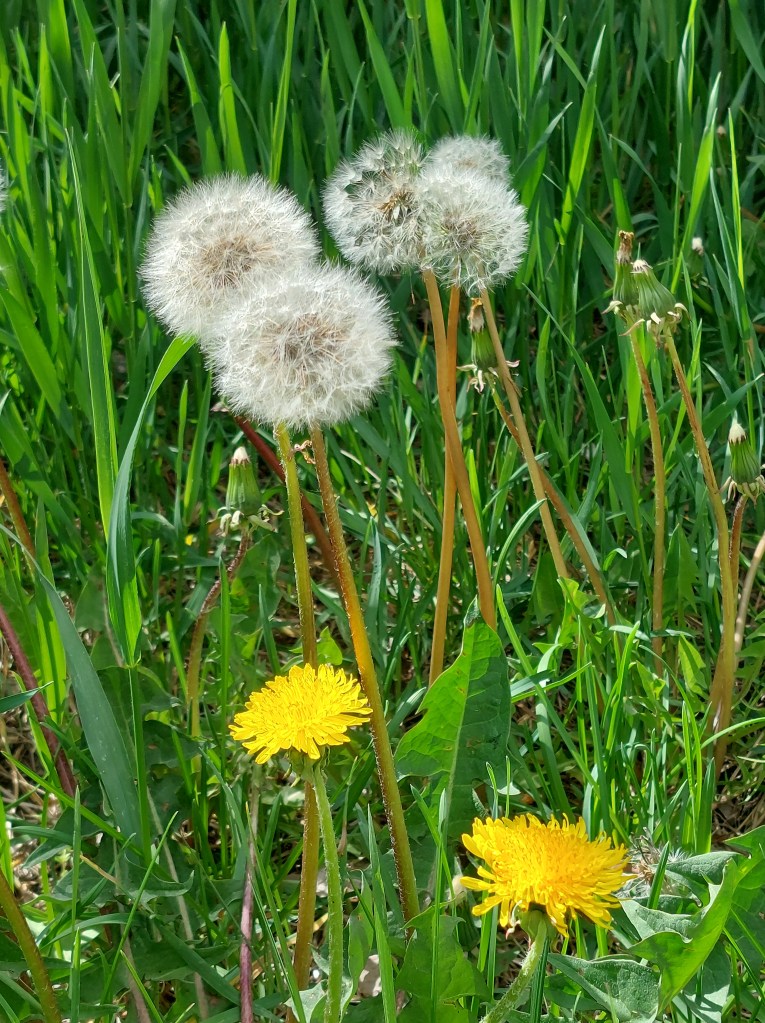
How weeds are managed can have a big impact on health. For example, dandelions are considered a weed by many, but their flowers, leaves, and roots are edible. They’re also one of pollinators’ first foods of the season and their roots break up compacted soils. Common herbicides (weed killers), used to control dandelions and other weeds on school grounds have been linked to cancer, birth defects, fertility problems, hormone problems, and organ damage. Not a great trade off, especially for children, who are at a greater risk when exposed to toxins.
Fortunately, there are alternatives. There are non-toxic and less-toxic ways to manage weeds, some that can even save money. See the nonprofit Beyond Pesticides for more information, https://www.beyondpesticides.org/programs/children-and-schools/alternatives-at-schools
Also check out the School Integrated Pest Management program through the University of Wyoming, https://www.uwyo.edu/ipm/community-ipm/school-ipm.html The program can provide direct assistance to schools/districts.
One of the simplest ways to promote health at school when it comes to weeds is to increase our weed tolerance. We can learn to live with more weeds. Schools and districts can adjust their weed management programs and goals accordingly. We can also educate others about beneficial “weeds” so schools/districts get fewer complaints and feel less pressured to use herbicides to wipe out every weed in sight. If schools/districts do use herbicides (or other pesticides) on school grounds, they must follow Wyoming’s Pesticides in Schools law and the product’s label instructions and precautions. Learn more about the law and its requirements to post signs and notify school staff and students at https://www.uwyo.edu/ipm/community-ipm/notification.html and https://www.wyoleg.gov/2001/engross/hb0028.htm
 Wyoming Healthy Schools