15 Actions for a Healthier School
Also check out our page on 3D Printers and Health at School
Everyone can contribute to making schools a healthier place, including families and community members. We know that how schools are cleaned and maintained, physical conditions in classrooms, foods provided, and even school supplies expose students to substances that can help or harm them, affecting their lifelong health. The great news is that healthy school environments and good nutrition not only help kids’ bodies be well, they also help kids learn.1, 2 Read on for 15 actions you can take for healthier schools in your community.
1. Learn why school environments matter.
- Many students spend the majority of their waking hours at school. While there, they are exposed to many different chemicals—cleaning and disinfecting products, fumes from school supplies (like dry erase and permanent markers), scented products, hand sanitizer, pesticides, art and science materials, off-gassing of new materials, emissions from copiers and printers, fumes from building maintenance activities, and additives in processed foods.
- These can be inhaled, ingested, or absorbed through skin.
- Indoor air can be 100 times more polluted than outdoor air, especially in sealed buildings where windows don’t open.3
- Children’s unique behaviors (such as putting their hands in their mouths, laying heads on desks, and sitting on the floor) expose them to more chemicals than adults. Kids also breathe, eat, and drink more in proportion to their body weight than adults, so they are exposed to more chemicals in air, food, and water.3- 7
- Children are at a greater risk of serious health problems from chemicals because their bodies are still developing, and they’re less able to metabolize, detoxify, and excrete toxins. These health problems can show up immediately or later in life.6-8 Those with pre-existing health concerns are at the greatest risk. Environmentally related diseases in U.S. children cost $76.6 billion per year.5
- Cancer is the second leading cause of death for kids ages 1-14 in the United States. Research suggests environmental contaminants are playing a role. 5, 7, 9
- Reducing pollution sources at school lowers these risks and can lead to improved student academic performance, staff performance, and health. It can also reduce absenteeism.1
2. Ensure only staff uses cleaning and disinfecting products, never students.
- Many cleaning and disinfecting products contain hazardous chemicals, which can be absorbed through skin and inhaled. Health effects from them can include cancer, asthma, skin and eye irritation, fertility problems, birth defects, and disruption of hormones.
- Disinfectants, including disinfecting wipes, are pesticides, and their label is literally the law.10 Having children use disinfectants violates federal law.
- The U.S. Centers for Disease Control and Prevention (CDC) states, “Cleaning and disinfection products should not be used by or near students.”11
- Students can clean up after themselves with soap and water. Avoid antibacterial soaps because of the potentially harmful chemicals they contain, and avoid scented soaps, which can trigger asthma, allergies, and headaches.12, 13
- Find out your school practices and policies about cleaning and disinfecting. If students are using these products, talk to teachers and school officials. Share this information with them, and ask them to only allow adults to handle these products.
3. Ask school staff to store cleaning and disinfecting products out of sight and reach of students (not on countertops or in lower cabinets).11
4. Encourage CLEANING in classrooms, rather than routine disinfecting.
- Cleaning products are usually much safer than disinfectants. For the safest cleaning, use plain soap and water (avoiding antibacterial and scented soaps).
- Cleaning removes germs from a surface and the conditions they need to thrive, lowering the risk of infection. Disinfectants use chemicals, usually hazardous ones, to kill them.13, 14 Disinfectants are only effective when you carefully follow their label directions.
- During the COVID-19 pandemic the CDC found there’s low risk of infection from touching surfaces.15 As of 2023, the CDC’s guidance is, “Cleaning alone removes most types of harmful germs (like viruses, bacteria, parasites, or fungi) from surfaces … In most situations, cleaning regularly is enough to prevent the spread of germs.”16
- Disinfecting wipes are not allowed to be used in child care facilities in Wyoming.17
5. Ask that students wash hands rather than use hand sanitizer.
- Hand sanitizer doesn’t clean hands. It uses chemicals to kill microbes. It’s not effective when hands are dirty.13
- Hand sanitizer only kills certain easy-to-kill germs, leaving other potentially harmful ones behind.13
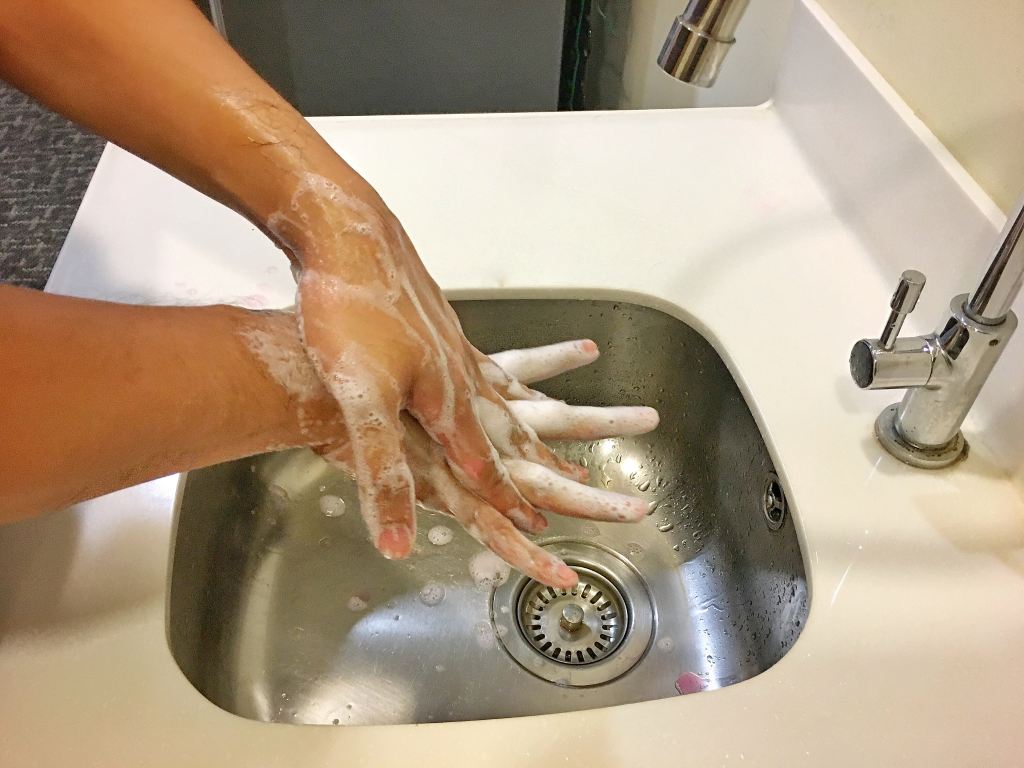
- Handwashing cleans hands AND washes away germs that can cause illness.13 It also washes away chemicals.18
- The CDC recommends washing hands with soap and water over the use of hand sanitizer at school, even to reduce the spread of coronavirus and the flu.18-20
6. Check that classroom vents are clear.
- Ventilation is key to good indoor air quality and preventing infectious diseases by diluting germs in the air.1,21
- Fresh air is important to student concentration.
- If vents are blocked, ask teachers to clear them.
7. Support going fragrance-free.
- Scented products, including those with essential oils, are a source of indoor air pollution.22, 23
- Hundreds of chemicals can be used to create one scent, and these are often hazardous chemicals.24, 25
- Fragrance is a common allergen and can cause headaches, trigger asthma attacks, and interfere with hormones.13, 23, 26 Even natural fragrances, such as essential oils, can emit hazardous and carcinogenic compounds.24, 27
- Fragrance-free cleaning, disinfecting, and soap products are available for schools and districts to purchase.
- Eliminating air fresheners promotes health while saving schools money.
8. Make sure what you bring or send to school supports health.
- Don’t bring or send products that contribute to indoor air pollution, like scented hand sanitizer, aerosols, alcohol-based markers (such as many permanent markers), nail polish, air fresheners, perfume/cologne, or other scented products.
- Don’t bring cleaning and disinfecting products to school. The school should have its own used by custodians, and schools have requirements they must follow for chemical products. Also, certain cleaning and disinfecting products can react with others to produce toxic fumes. If a teacher asks you to bring them, talk to them about healthier options for routine classroom cleaning, such as soap and water. Soap and water wash away germs and conditions they need to thrive, rather than use chemicals to kill them.13
9. Be part of the food solution.
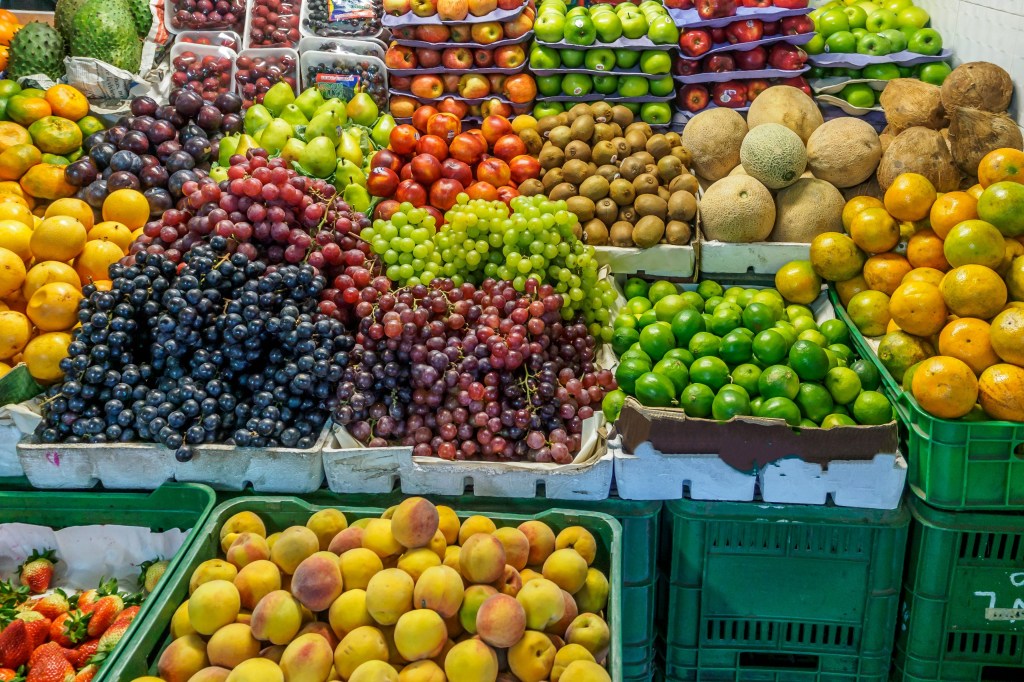
- Ask your school district to provide breakfasts and lunches focused on fresh, unprocessed foods, avoiding potentially harmful food additives like preservatives; artificial colors, sweeteners, and flavors; and other forms of added sugar. Some food additives, especially artificial colors, can cause behavior problems. Others have been linked to cancer, increased risk of heart disease, and allergic reactions.28
- Encourage your district to think about food packaging and never heat food in its packaging. Chemicals from it can leach into food, especially when heated. Plastic, styrofoam, and grease-proof packaging are of special concern.29-31
- Donate healthy snacks to your student’s class. Examples are vegetables, fruit, seeds, nuts (avoid if allergies), whole-grain crackers, and cheese.
10. Focus on fun, not food, for school rewards, celebrations, and fundraisers.
- Food as a reward or center of a celebration can lead to unhealthy lifelong attitudes about food, exclude students with allergies and dietary restrictions, and undermine other healthy schools efforts.
- Ask your school to reward with fun, such as special privileges, playing games, extra recess, fun projects, dance parties, or other activities.
- Support non-food fundraising ideas for your school. There are lots of ideas online.
11. Ask that products with toxins or fumes are used AFTER students have left for the day.
- Maintenance activities such as interior painting, floor finishing, carpet installation, renovations, and chemical fertilizer and pesticide application should happen when there is the longest possible window before students will return, preferably over long breaks.
- If cleaning products (not just soap and water) must be used during the day, it should happen when students are out of the classroom, such as during a recess, lunch, or passing period.
- When emergency cleaning or disinfecting is necessary (such as for blood or vomit), students should leave the area first.32
- If any disinfecting or sanitizing is required to occur during the school day by health department regulations (such as lunchroom sanitizing), it should occur after students and other occupants have left the area.33
12. Support healthier alternatives.
- Encourage your school to select healthier products whenever possible. For example, unscented, water-based markers (such as unscented Crayola and Rose Art markers) are generally safer than solvent-based markers, like some popular permanent markers.34 Dry erase markers are a source of indoor air pollution, but dry erase crayons and pencils are not.35
- Advocate for nontoxic methods to maintain school grounds, including fertilizing and controlling weeds.
- Schools can use Integrated Pest Management (IPM) to address pest problems in the safest, most effective way. IPM can save money over conventional pest control. The University of Wyoming has a School IPM program that can help.36
- Certain cleaning, sanitizing, and disinfecting products are safer than others. Those certified by Green Seal, U.S. EPA’s Safer Choice program, ECOLOGO, or U.S. EPA’s Design for the Environment program are a great place to start.37-40

13. Report concerns.
- Symptoms of illness caused by the school environment can be similar to common childhood illnesses. They can include headaches; eye, nose, and throat irritation; respiratory problems; allergic reactions; and coughing.41 They can also include dizziness and nausea.
- If your student gets better when they leave school, but symptoms recur when they return, it could mean something at school is making them sick. Notice if their health complaints follow a pattern of certain times or days of the week. Find out if other students and staff in the same area of the building are having similar health problems.42
- Recent school renovations or new furnishings, carpet, paint, equipment (including 3D printers), materials, pesticide use (including disinfectant wipes), or a change in cleaning products or practices could be the cause.42 Also ask for someone to check that the ventilation system is working properly in that area of the building and that air filters are clean.
- A new class pet, mold from flooding or water leaks (sometimes inside walls or under flooring), and essential oils and air fresheners can also cause health problems.42
- If you suspect something in the school environment is making your student sick, report your concern to the school. If they’re unresponsive or dismiss your concern without investigating, consider contacting the school superintendent, school board, and health officials.
14. Advocate.
- Your voice matters. Families and community members can be a powerful force for healthier schools, especially when they join together.
- Share what you learn about healthy schools with others.
- Support existing healthy practices and policies at your school and work for new ones as needed.
15. Connect.
- Join the Wyoming Healthy Schools public Facebook group to connect with other healthy schools supporters. You can also click the Facebook logo at the bottom of this page to view it.
- Subscribe to the Wyoming Healthy Schools e-newsletter for news, resources, and opportunities. Subscribe at the bottom of this page or via our Contact page.
- Share your healthy schools success stories with Wyoming Healthy Schools through the form on our Contact page and with your community. It builds support for the great work you’re doing and shows others what’s possible.
References
1. U.S. EPA, “Student Health and Academic Performance Quick Reference Guide,” November 2012, https://www.epa.gov/sites/production/files/2014-08/documents/student_performance_findings.pdf, accessed 4/26/23
2 Wyoming Department of Education, School Wellness Policies, https://edu.wyoming.gov/for-district-leadership/nutrition/wellness-policies/, accessed 4/25/23
3 U.S. EPA, “Why Indoor Air Quality is Important to Schools,” last updated 12/5/22, http://www.epa.gov/iaq-schools/why-indoor-air-quality-important-schools
4. U.S. EPA, “Children Are Not Little Adults!,” last updated 6/21/22, https://www.epa.gov/children/children-are-not-little-adults
5. U.S. EPA, “NIEHS/EPA Children’s Environmental Health and Disease Prevention Research Centers Impact Report: Protecting children’s health where they live, learn, and play,” EPA Publication No. EPA/600/R-17/407, 2017, https://www.epa.gov/sites/default/files/2017-10/documents/niehs_epa_childrens_centers_impact_report_2017_0.pdf, accessed 4/25/23
6. Physicians for Social Responsibility, “How Air Pollution Contributes to Lung Disease,” 2009, https://psr.org/wp-content/uploads/2018/05/air-pollution-effects-respiratory.pdf, accessed 4/25/23
7. Landrigan, P., “Environmental Health Threats to Children: A Look at the Facts,” INFORM, 2004, https://irp-cdn.multiscreensite.com/22c98fa0/files/uploaded/39849791-Environmental-Health-Threats.pdf, accessed 4/26/23
8. National Institute of Environmental Health Sciences, “Child Development and Environmental Toxins,” September 2011, https://www.slideshare.net/v2zq/yzd112, accessed 4/26/23
9. U.S EPA, “Children’s Environmental Health Facts,” last updated 11/22/22, https://www.epa.gov/children/childrens-environmental-health-facts
10. U.S. EPA, “Introduction to Pesticide Labels,” updated 6/15/22, https://www.epa.gov/pesticide-labels/introduction-pesticide-labels
11. U.S. CDC, “Six Steps for Properly Cleaning and Disinfecting Your School,” 11/5/20, https://archive.cdc.gov/#/details?url=https://www.cdc.gov/coronavirus/2019-ncov/downloads/community/schools-childcare/Six-Steps-for-Cleaning-Disinfecting-school.pdf, accessed 4/22/24
12. Orvos, D.R. and D.J. Versteeg, J. Inauen, et. al., “Aquatic Toxicity of Triclosan,” Environmental Toxicology and Chemistry 21, no. 7 (2002) 1338–49 as cited in the Cleaning for Healthy Schools Infection Control Handbook 2010 edition
13. Washington State Department of Health, “Classroom Cleaning Tips for Teachers,” http://www.doh.wa.gov/CommunityandEnvironment/Schools/EnvironmentalHealth/ClassroomCleaning, accessed 4/26/23
14. Rose, Lynn and Carol Westinghouse primary authors, prepared in collaboration with the Toxics Use Reduction Institute at the University of Massachusetts Lowell, Cleaning for Healthy Schools Infection Control Handbook, Chapter 2, p. 23, updated 2020, https://www.informedgreensolutions.org/cleaning-for-healthier-schools-infection-control-handbook
15. U.S. CDC, “Science Brief: SARS-CoV-2 and Surface (Fomite) Transmission for Indoor Community Environments,” last updated 4/5/21, https://stacks.cdc.gov/view/cdc/104762, accessed 4/22/24
16. U.S. CDC, “When and How to Clean and Disinfect a Facility,” last reviewed 11/2/22, https://www.cdc.gov/hygiene/cleaning/facility.html
17. Wyoming Department of Family Services, Child Care Licensing Rules, Chapter 8: Health and Sanitation, Section 4(d)(v)(B), p. 8-10, updated February 2022, https://dfs.wyo.gov/providers/child-care/licensing-rules/
18. U.S. CDC, “When and How to Wash Your Hands,” updated 11/15/22, https://www.cdc.gov/handwashing/when-how-handwashing.html
19. U.S. CDC, “Guidance for School Administrators to Help Reduce the Spread of Seasonal Influenza in K-12 Schools,” last reviewed 10/12/22, http://www.cdc.gov/flu/school/guidance.htm
20. U.S. CDC, “Show Me the Science-When & How to Use Hand Sanitizer in Community Settings,” last reviewed 10/10/20, https://www.cdc.gov/handwashing/show-me-the-science-hand-sanitizer.html
21. U.S. CDC, “Ventilation in Schools and Childcare Programs,” updated 2/26/21, https://www.cdc.gov/coronavirus/2019-ncov/community/schools-childcare/ventilation.html
22. Steinemann, A, “The fragranced products phenomenon: air quality and health, science and policy,” Air Quality, Atmosphere & Health14,235–243 (2021), https://doi.org/10.1007/s11869-020-00928-1, accessed 4/26/23
23. Steinemann, A, “Fragranced consumer products: effects on asthmatics,” Air Quality, Atmosphere & Health, 11, 3–9 (2018), https://doi.org/10.1007/s11869-017-0536-2, accessed 4/26/23
24. Children’s Environmental Health Network, “FAQs: Fragrances,” https://cehn.org/our-work/eco-healthy-child-care/ehcc-faqs/fragrances/#:~:text=Chemicals%20found%20in%20fragrances%20include,are%20at%20especially%20high%20risk, accessed 4/26/23
25. Bickers, David, et al., “The safety assessment of fragrance materials,” Regulatory Toxicology and Pharmacology 37 (2003) 218-273, https://fragrancematerialsafetyresource.elsevier.com/sites/default/files/AB-2-Bickers-Safety.pdf, accessed 4/26/23
26. Rose, Lynn and Carol Westinghouse primary authors, prepared in collaboration with the Toxics Use Reduction Institute at the University of Massachusetts Lowell, Cleaning for Healthy Schools Infection Control Handbook, Appendix A, p. 9, updated 2020, https://www.informedgreensolutions.org/cleaning-for-healthier-schools-infection-control-handbook
27. Nematollahi, N. and S.D. Kolev, A. Steinemann, “Volatile chemical emissions from essential oils,” Air Quality, Atmosphere & Health, 11,949–954 (2018), https://doi.org/10.1007/s11869-018-0606-0, accessed 4/26/23
28. School Food Focus, “Ingredient Guide for Better School Purchasing (full document),” https://healthyschoolscampaign.org/dev/wp-content/uploads/2020/01/Ingredient-Guide-for-Better-School-Food-Purchasing.pdf?fbclid=IwAR20_riBzLQ4RONaxc2XdWMUMrOyKsatwZQVeX2iXoDpFxYMosEytK6azME, accessed 4/26/23
29. Center for Environmental Health, “Polystyrene Foam Factsheet,” https://ceh.org/wp-content/uploads/2020/02/Polystyrene-Factsheet.pdf?utm_medium=email&_hsmi=252437300&_hsenc=p2ANqtz-9bS-RgKlVwD7ErT3ntYQ4K7qrhPXmDzGgJ7wJ30Zvawj0gRahWf7R6Uo3MAOkhYkZ_ExiU5bTcpS-FVPpRZB0iys91PA&utm_content=252437300&utm_source=hs_email, accessed 4/26/23
30. Seltenrich, Nate, “PFAS in Food Packaging: A Hot, Greasy Exposure,” Environmental Health Perspectives (a journal of the National Institute of Environmental Health), 5/28/20, https://ehp.niehs.nih.gov/doi/full/10.1289/EHP6335, accessed 4/26/23
31. Balthazar, Deborah, et al., “Is it safe to microwave plastic containers?,” Science Line, 9/8/22, https://scienceline.org/2022/09/is-it-safe-to-microwave-plastic-containers/, accessed 4/26/23
32. Rose, Lynn and Carol Westinghouse primary authors, prepared in collaboration with the Toxics Use Reduction Institute at the University of Massachusetts Lowell, Cleaning for Healthy Schools Infection Control Handbook, Appendix A, p. 11, updated 2020, https://www.informedgreensolutions.org/cleaning-for-healthier-schools-infection-control-handbook
33. Rose, Lynn and Carol Westinghouse primary authors, prepared in collaboration with the Toxics Use Reduction Institute at the University of Massachusetts Lowell, Cleaning for Healthy Schools Infection Control Handbook, Chapter 5, p. 107, updated 2020, https://www.informedgreensolutions.org/cleaning-for-healthier-schools-infection-control-handbook
34. Coalition for Healthier Schools, “Healthy Purchasing for Healthy Schools: A Guidance Memo,” pp. 11 & 13, https://www.healthyschools.org/data/files/CHS_healthypurchasinghealthyschools_memo_2014.pdf, accessed 4/26/23
35. U.S. EPA, “Controlling Pollutants and Sources: Indoor Air Quality Design Tools for Schools,” last updated 9/14/22,
36. University of Wyoming, “School IPM,” http://www.uwyo.edu/ipm/community-ipm/school-ipm.html, accessed 4/26/23
37. Green Seal, https://greenseal.org/?gclid=EAIaIQobChMI0ezi_qrI_gIVOxCtBh1ShAEbEAAYASAAEgJ0nfD_BwE
38. U.S. EPA, Safer Choice, https://www.epa.gov/saferchoice
39. ECOLOGO Certification Program, https://www.ul.com/resources/ecologo-certification-program
40. U.S. EPA, Design for the Environment, https://www.epa.gov/pesticide-labels/learn-about-design-environment-dfe-certification
41. U.S. EPA, “Why Indoor Air Quality is Important to Schools,” last updated 12/5/22, https://www.epa.gov/iaq-schools/why-indoor-air-quality-important-schools
42. U.S. EPA, “Parents, Students, and Healthy Indoor School Environments,” last updated 7/6/22, https://www.epa.gov/iaq-schools/parents-students-and-healthy-indoor-school-environments
 Wyoming Healthy Schools