21 Cleaning Best Practices for a Healthier School
How Cleaning Impacts Health
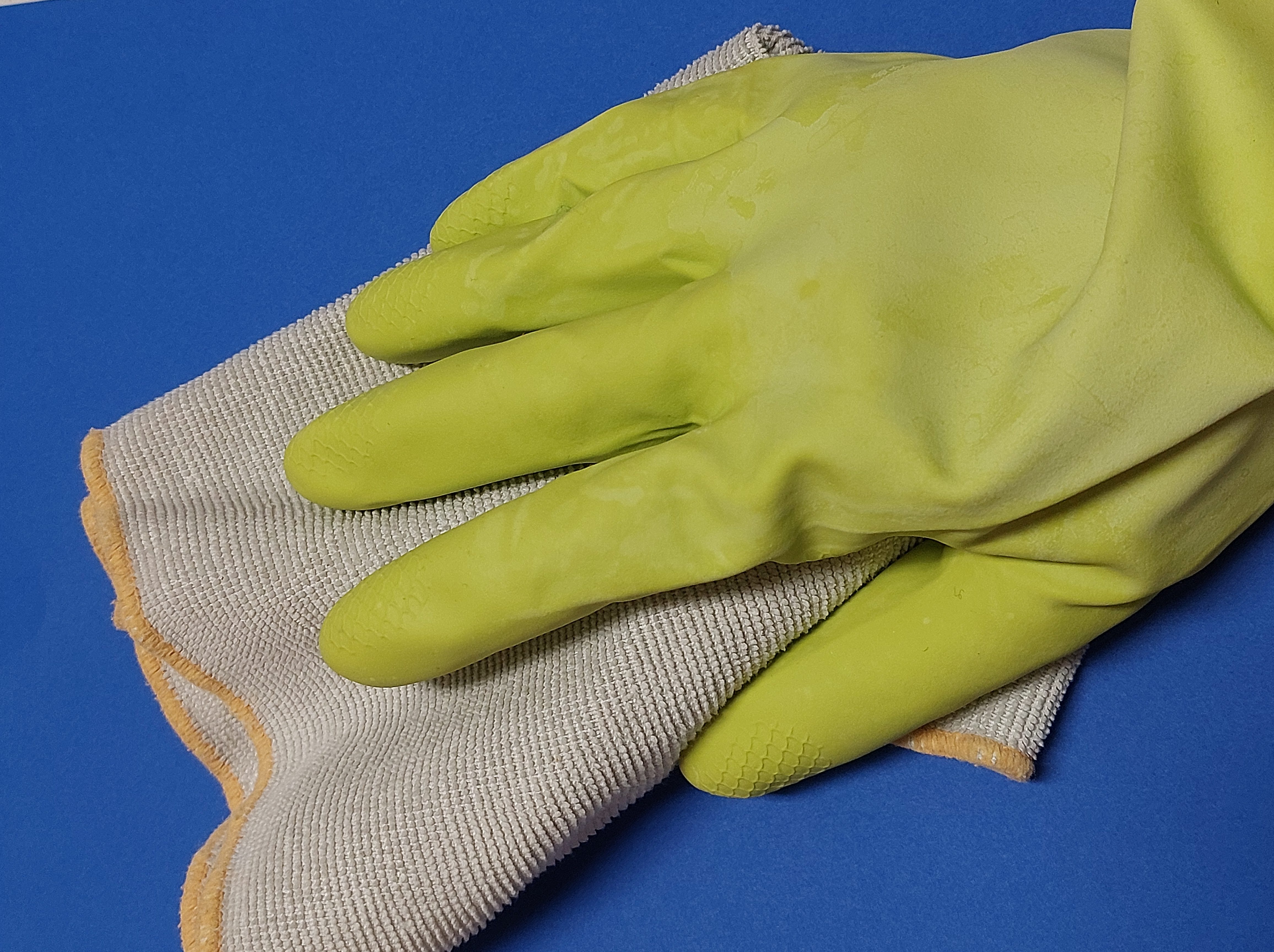
Cleaning is essential to healthy schools. It removes germs from surfaces and eliminates the conditions they need to thrive, such as dirt, moisture, and oils. This lowers the risk of getting sick from certain kinds of germs when you touch a surface. Cleaning can also wipe away allergens and chemicals. A clean school can even prevent pest problems.
However, excessive or improper cleaning, sanitizing, and disinfecting with chemical products can increase student and staff exposure to toxins. This can harm the immune system and cause other serious health problems.1, 2 Excessive use of cleaning and disinfecting products can also trigger asthma and allergies.3
Cleaning and disinfecting products are required to carry the warning “Keep Out of Reach of Children” on their labels because children birth through age 18 are at a greater risk than adults of developing serious health problems from chemical exposure. Their bodies are still developing, and they breathe proportionately more air than adults. They have unique activity patterns and behaviors that increase their exposure to chemicals, and their bodies are less able to metabolize, detoxify, and excrete toxins.4-10 Research has shown chemical exposures during childhood may contribute to health problems later in life.11
Even for adults, effects can show up years after exposure and include respiratory diseases, heart disease, cancer, and reproductive problems.12-14 Those with pre-existing health problems are at an even greater risk. That’s a big concern since an average of one in four kids has a chronic health issue, and asthma is one of the leading causes of missed school days.3, 15 Also, asthma caused by exposures at work (occupational asthma) is growing. School employees have high rates of work-related asthma and other respiratory disorders, and twice as many janitorial workers develop asthma as those in other occupations.1, 16
Clean schools can—and should—be healthy schools. Read the best practices below to learn how. Continue learning by checking out the resources listed after.
21 Cleaning Best Practices for
a Healthier School
1. Know the difference between cleaning, sanitizing, and disinfecting. It matters.
CLEANING physically removes germs and the conditions they need to thrive, such as dirt, moisture, and oils, from a surface. By removing germs, cleaning lowers the risk of spreading infections from contact with the surface. 17 While cleaning products may contain toxic ingredients, they are generally less hazardous than disinfecting products. Cleaning can also be done with plain soap and water. (Avoid scented and antimicrobial soaps.)
DISINFECTING uses chemicals (usually toxic ones) to kill germs on a surface. It doesn’t necessarily remove germs or clean dirty surfaces. You can’t disinfect a dirty surface because the chemicals can’t reach germs under dirt or other substances. Therefore, a surface needs to be cleaned before being disinfected (although some products claim to clean and disinfect at the same time). Disinfectants are only effective when used exactly as directed on their labels. All disinfectants, including disinfecting wipes, are pesticides.18 Disinfectants don’t necessarily kill parasites or spores from fungi, such as molds. Different disinfectant chemicals are effective against different disease-causing microbes and on different types of surfaces.
SANITIZING lowers the number of bacteria (not necessarily viruses or fungi) on a surface to a safe level according to public health standards or requirements. Sanitizing can involve either cleaning or disinfecting.17 Health departments usually have regulations about sanitizing surfaces and objects in school lunchrooms and kitchens, but may not have authority over other areas of the school building.
2. Don’t disinfect when cleaning will do.
Disinfectants use toxic chemicals to kill germs. These chemicals can harm people, too. All disinfectants, including disinfecting wipes, are pesticides.18 Some common types of disinfectants (like bleach and ammonia-based products) increase people’s risk of getting asthma, and any disinfectant can trigger an asthma attack.19, 20 Ingredients in disinfectants have also been linked to cancer, skin problems, and interference with hormones.21
This is why the least toxic, effective alternative should always be the first choice. In most cases this means cleaning, rather than disinfecting. In fact, the U.S. Centers for Disease Control and Prevention (CDC) states, “Cleaning alone removes most types of harmful germs (like viruses, bacteria, parasites, or fungi) from surfaces … In most situations, cleaning regularly is enough to prevent the spread of germs.”22
However, disinfection should be used after cleaning body fluids, such as vomit and blood, and when necessary in high-risk areas of the school, such as the nurse’s office and restrooms.23- 25 Disinfecting wipes are not allowed to be used in child care facilities in Wyoming.26
3. Clean, rather than disinfect, routinely in classrooms.
Since cleaning is effective in helping to prevent the spread of infectious diseases—even COVID-19 and the flu—and can be done with less hazardous products than disinfectants, cleaning should be the routine in classrooms. 23, 25
4. Make sure only adults use cleaning and disinfecting products, NEVER students.
The CDC states “Cleaning and disinfection products should not be used by or near students.”27 This is to protect children’s developing bodies from the danger these products pose. Chemicals don’t have to be ingested to cause harm. They can be absorbed through skin and inhaled. Cleaning and disinfecting products are not tested for safety on children. In fact, Occupational Safety and Health Administration (OSHA) regulations state, “There is no requirement for testing chemicals” at all to determine the hazards of a chemical or chemical mixture.28 (OSHA is the agency that regulates Safety Data Sheets. The U.S. Environmental Protection Agency (EPA) does require manufacturers to provide data from studies during the pesticide registration process.29)
If students need to clean up after themselves, have them use a cloth or paper towel with water or fragrance-free soap and water. Make sure the soap is not antibacterial. The CDC says, “there is no added health benefit for consumers … using soaps containing antibacterial ingredients compared with using plain soap.”30 The U.S. Food and Drug Administration (FDA) states, “there isn’t enough science to show that over-the-counter antibacterial soaps are better at preventing illness than washing with plain soap and water … In addition, the wide use of these products over a long time has raised the question of potential negative effects on your health.” Animal studies of some of the chemicals used in antibacterial soaps show they alter the way hormones work in the body. Data suggest they may also make bacteria resistant to antibiotics.31
5. Only specially trained staff, such as custodians, should use disinfectants.
Because of the serious risks disinfectants pose, only staff trained in how to use them safely and effectively should. In most cases, this means only custodians. If a situation arises in a classroom where disinfection is needed, a teacher should ask a custodian to take care of it. This also protects schools and districts from potential liability problems.
It is okay for teachers and other school staff (NOT STUDENTS) to handle cleaning products, but they should still receive basic training in how to use them safely and effectively. It’s a common problem in schools for teachers and other staff to misuse or overuse cleaners and disinfectants because of their lack of training about these products, endangering themselves and students.
6. Use cleaning and disinfecting products AFTER students have left for the day. In special situations where they must be used during the school day, use them when students are out of the space (such as during recess or lunch).
This reduces student exposure by allowing time for chemicals to dissipate before students return. When emergency cleaning or disinfecting is necessary (such as for blood or vomit), have students leave the area until cleanup is completed.
If health department regulations require disinfecting or sanitizing during the school day (such as lunchroom sanitizing), it should still happen after students and other occupants have left the space. Lunchroom sanitizing is often done with a chlorine bleach solution. Bleach is highly corrosive and irritates skin, eyes, and the respiratory tract. It evaporates in the air and is known to trigger asthma attacks and suspected of causing asthma.32 Children exposed to bleach may receive a bigger dose because their lungs are proportionately larger than adults’. Kids have smaller airways, however, which may make them more vulnerable to corrosive substances. Also, chlorine gas is heavier than air, so it sinks. This means shorter people or those sitting on the ground have the greatest exposure.33
Lunchroom sanitizing may seem like a small chemical exposure for students, but it’s significant when you consider it occurs every school day throughout their school career. This exposure can be minimized if staff waits a few minutes at the end of lunch so students can leave the lunchroom before tables are sanitized. If sanitizing is necessary between lunch periods, schedule as much time as possible before the next group of students enters the lunchroom.
7. Store cleaning and disinfecting products out of sight and reach of students. Make sure custodial carts are attended or stored in secure areas while students are in the building.
According to the nonprofit organization, Beyond Pesticides, “Student and staff poisoning at schools is not uncommon. The Government Accountability Office (GAO) in 2000 documented over 2,300 reported pesticide poisonings in schools between 1993 and 1996, and a 2005 study by researchers at the National Institute for Occupational Safety and Health (NIOSH) analyzed 2,593 poisonings from 1998 to 2002.34 Remember that disinfectants are a type of pesticide, and cleaning products are often toxic, too.
It’s a common problem in schools for these products to be stored on countertops and under sinks. Promote the health and safety of students and prevent liability problems by literally keeping cleaning and disinfecting products “out of the reach of children” as directed. Cleaning products could be stored in the classroom in an upper cabinet, locked file drawer, or closet shelf. Disinfectants (including wipes) should be stored in secure areas out of the classroom, such as custodial closets, because of their more hazardous ingredients. Custodial carts should be secured in custodial closets when not actively in use.
8. Read and follow directions for products. Many are commonly—and DANGEROUSLY—misused.
Pay special attention to:
SURFACE TYPE. Cleaning and disinfecting products are for use only on surfaces, not for killing or removing germs in the air. This includes disinfectant aerosol sprays. The label will say what type of surfaces the product may be used for. Nearly all disinfectants are only approved for use on hard, nonporous surfaces, such as countertops, stainless steel, and hard plastic.35 These should not be used on soft or porous surfaces, such as foam, fabric, or carpet. They may not be effective on porous or soft surfaces, and using them on these surfaces can expose students and staff to serious chemical hazards without the benefit of infection control. It also wastes time and money and violates federal law. Certain sanitizers are approved for spot treatment of soft surfaces.
PRE-CLEANING. You can’t disinfect a dirty surface. Best practice is to clean before disinfecting for maximum effectiveness, even if the product doesn’t specifically require pre-cleaning.
DILUTION. Some cleaning and disinfecting products are sold as a concentrate that must be properly diluted before being used. A trained custodian should do this according to the product’s label instructions. More or less is not better! It must be diluted exactly as directed for safe and effective use.
SPRAYING. Only some products are approved for spraying. Check the label. If the label mentions spraying, make sure you understand exactly what type of spraying is approved. There are big differences between hand pump trigger sprayers (such as spray bottles), wide-area spraying, electrostatic spraying, and fogging. There are also important differences in the droplet sizes produced by sprayers. The smaller the droplet size (fine), the longer the chemical stays in the air where it can be unintentionally inhaled. Larger droplets (coarse) are heavier, fall out of the air faster, and are less prone to drift away from targeted surfaces.
WIPING. Some products require wiping them on a surface to be effective. Spraying without wiping may mean germs are not killed or removed, leading to chemical exposures with no benefit.
DWELL TIME OR CONTACT TIME. This is the amount of time a sanitizer or disinfectant must stay visibly wet on a surface in order to kill germs. Many common disinfectants have a dwell time of four to ten minutes and may need reapplying to keep the surface wet this long. Not following the full dwell time can actually strengthen germs and create “superbugs,” microbes resistant to disinfectants and antibiotics. If you don’t have time to properly disinfect, consider cleaning instead.
RINSING. Many products leave a toxic chemical residue and require rinsing with potable water after the dwell/contact time, especially if the surface may come in contact with food. This includes student desks and tables if snacks, meals, or treats are ever eaten in the classroom. Some sanitizers should not be rinsed. Follow manufacturer instructions.
PERSONAL PROTECTIVE EQUIPMENT (PPE). The required or recommended PPE should be listed on the product’s label. Also check the product’s Safety Data Sheet (SDS). If different PPE is listed, wear whichever is most protective. Especially for disinfectants, best practice is to wear chemical-resistant gloves even when not required to prevent absorption of chemicals through the skin.
HANDWASHING. Always wash hands after using a chemical product even if you wear gloves.
9. Know that disinfectant labels are literally the law.
The information on a disinfectant label is not a suggestion. According to federal law, it’s required to be followed (as are all pesticide labels), and violations can be prosecuted.36 This includes the “KEEP OUT OF REACH OF CHILDREN” statement, which applies to children birth to age 18. This also means allowing children of any age to use disinfectants, including disinfecting wipes, is against the law.
Containers of a disinfectant that has been diluted from a concentrate may not have all the label information that the concentrate label has. In this case, the concentrate label is called the “primary label,” and the diluted container’s label is the “secondary label.” Those using disinfectant in containers with secondary labels are still required to follow the information on the product’s primary label. 37 Be sure to seek out the primary label, read it, and follow it.
10. Use only school or district-provided cleaning and disinfecting products. Never bring in your own or put on school supply lists.
This prevents dangerous reactions from incompatible chemicals mixing if a staff person uses one product on a surface and later a custodian uses a different chemical on the same surface, or if staff switch products they are bringing in. It also allows schools to comply with OSHA regulations requiring Safety Data Sheets to be on file for all chemical products in the school. Further, it ensures only products meeting the school’s or district’s criteria for health and safety are used and that the most appropriate product is used in each area of the school. Schools and districts should make sure staff has convenient access to appropriate cleaning products and supplies so there’s no need for them to bring in their own or request them from families.
11. Schools and districts should select safe products.
Certain cleaning, sanitizing, and disinfecting products are less hazardous than others. When selecting safe products, a good place to start is those that are third-party certified. Third-party certification means the product has been independently evaluated for human health and environmental safety and found to be less hazardous than similar types of products. Safer cleaning products are certified by Green Seal, the U.S. EPA’s Safer Choice program, and ECOLOGO.38-40 The U.S. EPA’s Design for the Environment Program (DfE) certifies safer antimicrobial products, including sanitizers and disinfectants.41 DfE-certified products have hydrogen peroxide, citric acid, lactic acid, and/or ethanol as their active ingredient(s).
Safer products can also be found by reading product information from manufacturers, especially product labels and Safety Data Sheets (SDS). As mentioned, SDS are regulated by OSHA, and a product’s SDS lists information its manufacturer provides about its chemical hazards. Again, when the hazards of a chemical or chemical mixture are determined, OSHA regulations state, “There is no requirement for testing chemicals.” 28 Also, data that are used to make a hazard determination are based on expected adult exposures, since the information on SDS is to protect workers. So, even chemicals not classified as hazardous may still pose a hazard, particularly to children.
SDS can contain a lot of technical information, but you don’t have to understand all of it for SDS to be useful. Look for any special hazards listed, such as the product targets specific organs or causes birth defects, reproductive harm, sensitization, respiratory problems, or cancer. Avoid these products for school use. Also see if the SDS lists a Hazard Materials Identification System (HMIS) health hazard rating (usually toward the end of the SDS). If it does, the lower the HMIS health number, the safer the product. An HMIS health hazard rating of 0 means no significant risk, and 1 means the product is slightly hazardous—exposure could cause irritation. Higher HMIS numbers mean more severe health hazards, with a 4 (the highest on the scale) meaning deadly—very short exposure could cause death or serious injury. 42 Ideally, products used in schools have an HMIS health rating of 0 or 1 for the concentrated product, especially if it’s a cleaning product. Disinfecting products are more toxic in general, but safer disinfectants may still have an HMIS health rating of 2 or lower for the concentrated product.
The U.S. EPA has its own toxicity rating system for pesticides, including disinfectants. Confusingly, in the U.S. EPA system, the highest number is the least hazardous. Category IV products are considered the safest and may not require a precautionary statement on their labels. Category III products require a “Caution” statement on their label. Category I products (the lowest and most toxic on the scale) may require a “Danger-Poison” statement with a skull and crossbones symbol, because these products can be fatal at a low exposure.43 For safer disinfectants, look for products in U.S. EPA categories III or IV for the concentrated product.
Additionally, check SDS and product labels for requirements about Personal Protective Equipment (PPE) that must be worn when using the product. The more PPE required, the more hazardous the product.
Safer products are not necessarily more expensive. Many districts realize a cost-savings through implementing green cleaning strategies, such as decreasing overall chemical usage by using disinfectants only in areas requiring disinfection (such as high-risk areas like restrooms) and using cleaners (which can cost less but still prevent the spread of infectious diseases) elsewhere. This can also improve indoor air quality because cleaners usually contain fewer hazardous ingredients than disinfectants. Costs and chemical usage also can be decreased by using microfiber cloths and microfiber mops, which clean effectively with less product; purchasing fewer different types of cleaning/disinfecting products; and using dilution and dispensing systems.
For detailed information about selecting safer, effective cleaning, sanitizing, and disinfecting products for schools, see the Infection Control Handbook for Schools, available online for free. It’s a wealth of information.
12. Go fragrance-free.
Healthy schools choose fragrance-free cleaning, sanitizing, and disinfecting products because scented products are a source of indoor air pollution.44, 45 Hundreds of chemicals can be used to create one scent, and these are often hazardous.46, 47 Some fragrance chemicals interfere with hormones, which can cause many serious and chronic health problems.46, 48 Others are known to cause cancer. 46 Fragrance chemicals can also trigger asthma and allergies. 23, 46, 48 This is a big deal because an average of one out of every ten school children has asthma, and asthma is among the leading reasons students miss school due to illness (more than 13.8 million missed days per year in the United States).49, 50 Additionally, scented products can trigger headaches, including migraines, making it difficult for students to learn and staff to work.23, 51 Even natural fragrances, such as essential oils, can emit hazardous and carcinogenic compounds.51
A growing number of people have sensitivities to fragrance chemicals, some severe. In fact, in a United States study, more than 34% of the general population surveyed reported health problems from fragrance. 2.7 times more people reported they would support a fragrance-free workplace over those who would not. More than 22% of people reported they’ve been prevented from going somewhere because they’d be exposed to a fragranced product that would make them sick, showing how fragrance can restrict access.52 Fortunately, fragrance-free products are increasingly available.
13. Know that natural cleaning and disinfecting products are not always safer.
Products marketed as “natural” are not required to actually have natural ingredients, and even if they do, not all natural substances are safe for human health. Understand that greenwashing (intentionally misleading buyers to think a product is safe for human health and the environment, when it is not) is a common practice. Be aware that marketing is designed to sell products, not accurately inform consumers. There are legitimate natural products that are safer, but check them out yourself to verify their claims are true. Third-party certification programs, like Green Seal, ECOLOGO, U.S. EPA’s Safer Choice, and U.S. EPA’s Design for the Environment, are a great place to start.38-40
14. Schools and districts should carefully consider whether to allow disinfecting wipes. If they do, all users should be trained and the wipes stored where only trained staff have access (never in classrooms).
There are some serious safety concerns about disinfecting wipes in schools. Two of the biggest are disinfecting wipes are frequently misused and overused. Many people don’t know disinfecting wipes are a pesticide product containing hazardous chemicals. Some of the most popular disinfecting wipes contain quaternary ammonium compounds, or “quats,” as their active ingredients (not bleach). Quats can cause and worsen asthma, irritate skin and nasal passages, and have been linked to reproductive and developmental problems in animals.53-57 As with any chemical, health risks are greater for children.
The wipes are often used inappropriately out of convenience and/or ignorance, such as to wipe away spills or wipe hands. Too frequently, school staff direct students to use them. Not only does this endanger students, it also violates federal law, posing huge liability issues for schools.
Few people read the full product labels, where specific, legally required information is given about how to use the wipes safely and effectively. The marketing for disinfecting wipes doesn’t educate users about all the required steps for disinfection, either, such as using them only on hard, nonporous surfaces; pre-cleaning surfaces; following dwell/contact times; and rinsing surfaces that may come in contact with food (including desks and tables where students eat snacks, treats, or meals) with potable water afterward depending on the product. Therefore, commonly, hazardous chemicals are spread around schools without actually disinfecting. This misuse can spread and strengthen germs, leading to microbes resistant to disinfectants.58
Increasingly, there are different types of wipes, some marketed as paper towel wipes that still contain antimicrobial chemicals. This complicates the issue further, especially since the packaging of different types of wipes can be very similar. For all these reasons, training is essential if disinfecting wipes are allowed in schools, and only staff who have been trained to use them safely and effectively should have access to them.
Note: Disinfecting wipes are not allowed to be used in child care facilities in Wyoming.26 State or local health departments may have additional regulations that apply to schools. For example, the Natrona County Health Department does not permit disinfecting wipes to be used in school kitchens or lunchrooms.59
15. Use the right product for the right job.
The product label should describe its appropriate uses. If you don’t have access to the right product for the job, consider if the job truly needs doing. For example, many microbes can only live on a surface and potentially infect someone for a short period of time. If the job does need doing, talk to school custodians or officials about getting an appropriate product. It can help to do your own research first so you can suggest a product that will work safely and effectively. Remember, however, school staff should never bring in their own cleaning and disinfecting products.
16. Use the smallest amount recommended by the manufacturer.
Using the smallest amount recommended on the product label for the job you are doing (cleaning vs. sanitizing vs. disinfecting) minimizes hazards to staff, students, and other occupants while providing infection control. More is not better. This also reduces waste, saving money.60
17. Make cleaning more effective by using microfiber.
To remove even more germs and dirt from hard surfaces, clean with a microfiber cloth or microfiber mop. Research shows that using a cleaner and plain microfiber cloth can capture and remove up to 99% of germs from nonporous surfaces.61, 62 Damp microfiber cloths are also great for dusting, since their fibers trap dust rather than kick up dust particles into the air. Just make sure the microfiber doesn’t contain additives, like nano-silver. Very little is known yet about the health effects of nanomaterials.63, 64
18. Apply products to hard surfaces with a cloth, rather than spraying the surface directly.
If the product is in a spray bottle, spray a cloth, and then wipe the cloth on the surface to apply it (unless the product’s label directions state otherwise). When products are sprayed directly on a hard surface, chemical mist can bounce off the surface and be inhaled.60
19. Understand the extra risks of disinfectant aerosol sprays. They may not be worth it.
Disinfectant products sold in aerosol containers produce a fine mist that can stay in the air a long time, where it can be easily inhaled. Therefore, they pose an extra risk for respiratory exposures compared to disinfectants used in a regular spray bottle (which produces larger, heavier droplets that fall out of the air faster). Also, people commonly misuse disinfectant sprays as air fresheners, not realizing they are a pesticide product.65 Among those who do want to disinfect, many don’t know disinfectant sprays only disinfect hard, nonporous surfaces. On soft surfaces, they work as a sanitizer. Remember, sanitizers lower the numbers of bacteria on a surface, not necessarily viruses or fungi.
Disinfectant aerosol sprays can have other risks, too. According to its manufacturer, one of the most popular disinfectant aerosol sprays contains propane, butane, and acetone (a chemical used in nail polish remover and varnish), making it highly flammable.66 Because of all these hazards, some experts recommend disinfectant aerosol sprays should not be allowed in schools.
20. Don’t use wide-area sprayers, electrostatic sprayers, vaporizers, foggers, and misters. They increase health risks and may not be effective for disinfection.
These methods carry additional safety risks over traditional means of disinfection like cloths and trigger spray bottles because, according to the CDC, they “aerosolize chemicals, or suspend them in the air, and they can stay in the air for long periods of time … Aerosolizing any disinfectant can irritate the skin, eyes, or airways and can cause other health issues for people who breathe it in … [in] areas where children spend time, safety risks are greater.”67 The CDC also states, “In most cases, fogging, fumigation, and wide-area or electrostatic spraying are not recommended as primary methods of surface disinfection and have several safety risks …”68 The World Health Organization says disinfection methods such as wide-area spraying or fogging are not recommended because they aren’t effective and may pose harm to individuals.69 Some state health departments offer similar guidance, “Do not use fogging, fumigation, or wide-area spraying to control the spread of germs. These methods are not effective, do not clean contaminated surfaces, and are hazardous to human health.”70
Sprayer and fogger devices cover many surfaces quickly, meaning that disinfection may not be targeted. Even when aimed at specific surfaces, there may be overspray, meaning the disinfectant lands on unintended and unapproved surfaces, such as carpets where young students may spend much of their day. When disinfection isn’t targeted, it increases exposure to disinfectants and their health risks, without added benefit.71 Disinfection also requires pre-cleaning surfaces, which is often skipped with these methods, and it can be hard to achieve the required dwell/contact time with the fine mists these methods produce. Also, disinfectants often require wiping for the disinfectant to come in full contact with germs on a surface and kill them.
21. Continue learning about cleaning for healthy schools.
See the resources below to get started. Healthier cleaning practices are often called “green cleaning.”
References appear below the Cleaning Resources list.
Cleaning Resources
Classroom Cleaning Tips for Teachers, Washington State Department of Health
https://doh.wa.gov/community-and-environment/schools/environmental-health/classroom-cleaning
Cleaning for Health, Informed Green Solutions
https://www.informedgreensolutions.org/cleaning-for-health
Infection Control Handbook for Schools, Informed Green Solutions
This free, in-depth guide covers many aspects of healthy cleaning, sanitizing, and disinfecting in schools. It includes the science of infection control; development of protocols; selection of safer products, dispensing equipment, and application systems; safe use practices; equipment for infection control; sample guidelines and posters; information on pesticide labels and Safety Data Sheets; and more.
https://www.informedgreensolutions.org/cleaning-for-healthier-schools
Indoor Air Quality Knowledge-to-Action Professional Training Webinar Series, U.S. EPA
Free, on-demand webinars, including effective cleaning for healthy school environments.
https://www.epa.gov/iaq-schools/indoor-air-quality-knowledge-action-professional-training-webinar-series
Green Cleaning Advocacy Handbook: 5 Steps to Green Cleaning in Schools, Healthy Schools Campaign
Information about how to successfully advocate for healthier school cleaning programs and policies.
https://www.healthygreenschools.org/wp-content/uploads/Green_Cleaning_Advocacy_Handbook.pdf
Cleaning and Safer Disinfecting Comic Strips, Pediatric Environmental Health Specialty Units
https://www.pehsu.net/Safer_Disinfectants_comic_strips.html
Safer Choice Program, U.S. EPA
A program that certifies safer products, including cleaning products.
https://www.epa.gov/saferchoice
Green Seal
A program that certifies safer products, including cleaning products.
https://greenseal.org/?gclid=EAIaIQobChMI0ezi_qrI_gIVOxCtBh1ShAEbEAAYASAAEgJ0nfD_BwE
ECOLOGO Certification Program
A program that certifies safer products, including cleaning products.
https://www.ul.com/resources/ecologo-certification-program
Design for the Environment, U.S. EPA
A program that certifies safer disinfectants.
https://www.epa.gov/pesticide-labels/learn-about-design-environment-dfe-certification
Cleaning References
- Informed Green Solutions, “Infection Control Handbook for Schools-What’s in the air in our schools?,” accessed 5/10/23, https://www.informedgreensolutions.org/cleaning-for-healthier-schools
- Beyond Pesticides, “Pesticide-Induced Diseases: Immune System Disorders,” accessed 5/10/2023, https://www.beyondpesticides.org/resources/pesticide-induced-diseases-database/immune-disorders
- U.S. EPA, “Student Health and Academic Performance Quick Reference Guide,” November 2012, https://www.epa.gov/sites/production/files/2014-08/documents/student_performance_findings.pdf
- U.S. EPA, “Children Are Not Little Adults!” updated 10/31/18, https://www.epa.gov/children/children-are-not-little-adults
- National Institute of Environmental Health Sciences & U.S. EPA, “NIEHS/EPA Children’s Environmental Health and Disease Prevention Research Centers: Protecting Children’s Health for a Lifetime,” October 2013, http://www.niehs.nih.gov/health/assets/docs_f_o/niehsepa_childrens_environmental_health_and_disease_prevention_research_centers_508.pdf
- Physicians for Social Responsibility, “How Air Pollution Contributes to Lung Disease,” 2009, http://www.psr.org/assets/pdfs/air-pollution-effects-respiratory.pdf
- Landrigan, P. J., “Children as a Vulnerable Population,” International Journal of Occupation, Medicine, and Environmental Health 17, 1 (2004): 175–77
- Goldman, L. R., “Children—Unique and Vulnerable: Environmental Risks Facing Children and Recommendations for Response,” Environmental Health Perspectives 103, Supplement 6 (September 1995): 13–18
- Landrigan, P., “Environmental Health Threats to Children: A Look at the Facts,” INFORM, 2004, https://irp-cdn.multiscreensite.com/22c98fa0/files/uploaded/39849791-Environmental-Health-Threats.pdf
- U.S EPA, “Children’s Environmental Health Facts,” last updated 11/22/22, https://www.epa.gov/children/childrens-environmental-health-facts
- National Institute of Environmental Health Sciences, “Child Development and Environmental Toxins,” September 2011, viewed 3/27/21, https://www.slideshare.net/v2zq/yzd112
- U.S. EPA, “Introduction to Indoor Air Quality,” last updated 1/11/21, https://www.epa.gov/indoor-air-quality-iaq/introduction-indoor-air-quality
- Gore, A.C. and V.A. Chappell, S.E. Fenton, et. al., “EDC-2: The Endocrine Society’s Second Scientific Statement on Endocrine-Disrupting Chemicals,” Endocrine Reviews, 2015 Dec; 36(6):E1-E150. doi: 10.1210/er.2015-1010. Epub 2015 Nov 6. PMID: 26544531; PMCID: PMC4702494, https://www.ncbi.nlm.nih.gov/pmc/articles/PMC4702494/
- Amir S, and STA Shah, C. Mamoulakis, et. al., “Endocrine Disruptors Acting on Estrogen and Androgen Pathways Cause Reproductive Disorders through Multiple Mechanisms: A Review,” International Journal of Environmental Research and Public Health, 2021 Feb 4;18(4):1464. doi: 10.3390/ijerph18041464. PMID: 33557243; PMCID: PMC7913912, https://pubmed.ncbi.nlm.nih.gov/33557243/
- Healthy Schools Campaign, “Schools Are Essential to Improving Health Outcomes,” viewed 5/6/21, https://healthyschoolscampaign.org/issues/school-health/
- Alexander, Darryl, Director of Health and Safety, American Federation of Teachers, as quoted in “How to Implement a Green Cleaning Program in Schools—the Right Way,” Green Schools National Network, 11/10/16, https://greenschoolsnationalnetwork.org/implement-green-cleaning-program-schools-right-way/
- U.S. Centers for Disease Control and Prevention, “How to Clean and Disinfect Schools to Help Slow the Spread of Flu,” last reviewed 9/22/21, https://www.cdc.gov/flu/school/cleaning.htm
- Rose, Lynn and Carol Westinghouse primary authors, prepared in collaboration with the Toxics Use Reduction Institute at the University of Massachusetts Lowell, Infection Control Handbook for Schools, Edition 2, Appendix A, p. 6, 2020-2021, https://www.informedgreensolutions.org/cleaning-for-healthier-schools-infection-control-handbook
- Pediatric Environmental Health Specialty Units (PEHSU), “Safer Disinfecting for Schools during the COVID-19 Pandemic,” last updated 1/4/20, https://wspehsu.ucsf.edu/wp-content/uploads/2020/11/schoolsfactsheet111120.pdf
- U.S. Centers for Disease Control and Prevention, “Safety Precautions When Using Electrostatic Sprayers, Foggers, Misters, or Vaporizers for Surface Disinfection During the COVID-19 Pandemic,” updated 4/14/21, https://www.cdc.gov/coronavirus/2019-ncov/php/eh-practitioners/sprayers.html
- Informed Green Solutions, “Choosing Safer Disinfectants Active Against the COVID-19 Virus,” viewed 5/6/21, https://irp-cdn.multiscreensite.com/22c98fa0/files/uploaded/Choosing%20Safer%20Disinfectants.%20Poster.%20July%202020.pdf
- U.S. Centers for Disease Control and Prevention, “When and How to Clean and Disinfect a Facility,” last reviewed 11/2/22, https://www.cdc.gov/hygiene/cleaning/facility.html
- Washington State Department of Health, “Classroom Cleaning Tips for Teachers,” viewed 3/23/21, http://www.doh.wa.gov/CommunityandEnvironment/Schools/EnvironmentalHealth/ClassroomCleaning
- Rose, Lynn and Carol Westinghouse primary authors, prepared in collaboration with the Toxics Use Reduction Institute at the University of Massachusetts Lowell, Infection Control Handbook for Schools, Edition 2, Chapter 2, p. 18, 2020-2021, https://www.informedgreensolutions.org/cleaning-for-healthier-schools-infection-control-handbook
- Rose, Lynn and Carol Westinghouse primary authors, prepared in collaboration with the Toxics Use Reduction Institute at the University of Massachusetts Lowell, Infection Control Handbook for Schools, Edition 2, Chapter 2, p. 23, 2020-2021, https://www.informedgreensolutions.org/cleaning-for-healthier-schools-infection-control-handbook
- Wyoming Department of Family Services, Child Care Licensing Rules, Chapter 8: Health and Sanitation, Section 4(d)(v)(B), p. 8-10, updated February 2022, https://dfs.wyo.gov/providers/child-care/licensing-rules/
- U.S. Centers for Disease Control and Prevention, “Six Steps for Properly Cleaning and Disinfecting Your School,” 11/5/20, https://archive.cdc.gov/#/details?url=https://www.cdc.gov/coronavirus/2019-ncov/downloads/community/schools-childcare/Six-Steps-for-Cleaning-Disinfecting-school.pdf, accessed 4/22/24
- Occupational Safety and Health Administration, Occupational Safety and Health Standards, 1910, Subpart Z, Toxic and Hazardous Substances, Appendix A to §1910.1200—Health Hazard Criteria, A.0.2.1, https://www.osha.gov/laws-regs/regulations/standardnumber/1910/1910.1200AppA
- U.S. EPA, “About Pesticide Registration,” last updated 1/25/23, https://www.epa.gov/pesticide-registration/about-pesticide-registration
- U.S. Centers for Disease Control and Prevention, “Handwashing: Clean Hands Save Lives, Publications, Data & Statistics,” Antibacterial Soap section, last reviewed 6/6/22, http://www.cdc.gov/handwashing/publications-data-stats.html
- U.S. Food and Drug Administration, “Antibacterial Soap? You Can Skip It, Use Plain Soap and Water.” 5/16/19, https://www.fda.gov/consumers/consumer-updates/antibacterial-soap-you-can-skip-it-use-plain-soap-and-water
- Rose, Lynn and Carol Westinghouse primary authors, prepared in collaboration with the Toxics Use Reduction Institute at the University of Massachusetts Lowell, Infection Control Handbook for Schools, Edition 2, Chapter 5, p. 109, 2020-2021, https://www.informedgreensolutions.org/cleaning-for-healthier-schools-infection-control-handbook
- Agency for Toxic Substances & Disease Registry, Toxic Substances Portal, “Medical Management Guidelines for Calcium Hypochlorite/Sodium Hypochlorite,” last reviewed 10/21/14, https://wwwn.cdc.gov/TSP/MMG/MMGDetails.aspx?mmgid=927&toxid=192
- Beyond Pesticides, “Pesticides in Our Homes and Schools: Are They Dangerous to Our Children?,” viewed 5/22/23, https://www.beyondpesticides.org/assets/media/documents/schools/publications/pesticides-homes-schools-09.pdf
- Rose, Lynn and Carol Westinghouse primary authors, prepared in collaboration with the Toxics Use Reduction Institute at the University of Massachusetts Lowell, Infection Control Handbook for Schools, Edition 2, Appendix B, p. 5, 2020-2021, https://www.informedgreensolutions.org/cleaning-for-healthier-schools-infection-control-handbook
- U.S. EPA, “Introduction to Pesticide Labels,” updated 6/15/22, https://www.epa.gov/pesticide-labels/introduction-pesticide-labels
- U.S. EPA, “Secondary Containers and Service Containers for Pesticides,” last updated 2/21/23, https://www.epa.gov/pesticide-labels/secondary-containers-and-service-containers-pesticides
- Green Seal, https://greenseal.org/?gclid=EAIaIQobChMI0ezi_qrI_gIVOxCtBh1ShAEbEAAYASAAEgJ0nfD_BwE, accessed 6/14/23
- U.S. EPA, Safer Choice, last updated 6/12/23, https://www.epa.gov/saferchoice
- ECOLOGO Certification Program, https://www.ul.com/resources/ecologo-certification-program, accessed 6/14/23
- U.S. EPA, Design for the Environment, last updated 5/2/23, https://www.epa.gov/pesticide-labels/learn-about-design-environment-dfe-certification
- Rose, Lynn and Carol Westinghouse primary authors, prepared in collaboration with the Toxics Use Reduction Institute at the University of Massachusetts Lowell, Infection Control Handbook for Schools, Edition 2, Appendix B, p. 11, 2020-2021, https://www.informedgreensolutions.org/cleaning-for-healthier-schools-infection-control-handbook
- Rose, Lynn and Carol Westinghouse primary authors, prepared in collaboration with the Toxics Use Reduction Institute at the University of Massachusetts Lowell, Infection Control Handbook for Schools, Edition 2, Appendix B, pp. 7-8, 2020-2021, https://www.informedgreensolutions.org/cleaning-for-healthier-schools-infection-control-handbook
- Steinemann, Anne, “The fragranced products phenomenon: air quality and health, science and policy,” Air Quality, Atmosphere & Health14,235–243 (2021), https://doi.org/10.1007/s11869-020-00928-1
- Steinemann, Anne, “Fragranced consumer products: effects on asthmatics,” Air Quality, Atmosphere & Health, 11, 3–9 (2018), https://doi.org/10.1007/s11869-017-0536-2
- Children’s Environmental Health Network, “FAQs: Fragrances,” https://cehn.org/our-work/eco-healthy-child-care/ehcc-faqs/fragrances/#:~:text=Chemicals%20found%20in%20fragrances%20include,are%20at%20especially%20high%20risk, accessed 6/6/23
- Bickers, David, et al., “The safety assessment of fragrance materials,” Regulatory Toxicology and Pharmacology 37 (2003) 218-273, https://fragrancematerialsafetyresource.elsevier.com/sites/default/files/AB-2-Bickers-Safety.pdf, accessed 6/6/23
- Rose, Lynn and Carol Westinghouse primary authors, prepared in collaboration with the Toxics Use Reduction Institute at the University of Massachusetts Lowell, Infection Control Handbook for Schools, Edition 2, Appendix A.3, pp. 9-10, 2020-2021, https://www.informedgreensolutions.org/cleaning-for-healthier-schools-infection-control-handbook
- U.S. EPA, “Sensible Steps to Healthier School Environments,” p. 3, July 2012, http://www.epa.gov/sites/production/files/2014-05/documents/sensible_steps.pdf
- American Lung Association, “Improve Asthma Management in Schools,” updated 10/23/20, https://www.lung.org/lung-health-diseases/lung-disease-lookup/asthma/asthma-education-advocacy/asthma-in-schools
- Nematollahi, N. and S.D. Kolev, A. Steinemann, “Volatile chemical emissions from essential oils,” Air Quality, Atmosphere & Health, 11,949–954 (2018), https://doi.org/10.1007/s11869-018-0606-0
- Steinemann, Anne, “Fragranced consumer products: exposures and effects from emissions,” Air quality, Atmosphere, & Health vol. 9,8 (2016): 861-866. doi:10.1007/s11869-016-0442-z, https://www.ncbi.nlm.nih.gov/pmc/articles/PMC5093181/
- Pediatric Environmental Health Specialty Units (PEHSU), “Safer Disinfecting for Schools during the COVID-19 Pandemic,” last updated 1/4/20, https://wspehsu.ucsf.edu/wp-content/uploads/2020/11/schoolsfactsheet111120.pdf
- Association of Occupational and Environmental Clinics, “Exposure Code Lookup,” Hazard/Keyword Benzalkonium Chloride, viewed 6/7/23, http://www.aoecdata.org/ExpCodeLookup.aspx
- Lynn Rose and Carol Westinghouse primary authors, prepared in collaboration with the Toxics Use Reduction Institute, University of Massachusetts-Lowell, Infection Control Handbook for Schools, Edition 2, Chapter 4, p. 7, 2020-2021, https://irp-cdn.multiscreensite.com/22c98fa0/files/uploaded/2020-Chapter%204.%20Selection%20of%20Products.pdf
- Stephanie M. Holm, M.D., MPH, Victoria Leonard, RN, PhD, et. al., “Do we know how to best disinfect child care sites in the U.S.? A review of available disinfectant efficacy data and health risks of the major disinfectant classes,” American Journal of Infection Control, https://www.ajicjournal.org/article/S0196-6553(18)30731-4/pdf
- Lim, XiaoZhi, “Do we know enough about the safety of quat disinfectants?” Chemical & Engineering News, 8/2/20, https://cen.acs.org/safety/consumer-safety/know-enough-safety-quat-disinfectants/98/i30
- Informed Green Solutions, Using Disinfecting Wipes at School poster, viewed 6/6/23, https://irp.cdn-website.com/22c98fa0/files/uploaded/Appendix%20I.%20Use%20of%20Disinfecting%20Wipes.%20Poster.%20July%202020.pdf
- Natrona County Health Department, personal communication, 2/1/16
- Rose, Lynn and Carol Westinghouse primary authors, prepared in collaboration with the Toxics Use Reduction Institute at the University of Massachusetts Lowell, Infection Control Handbook for Schools, Edition 2, Chapter 5, p. 107, 2020-2021, https://www.informedgreensolutions.org/cleaning-for-healthier-schools-infection-control-handbook
- Rose, Lynn and Carol Westinghouse primary authors, prepared in collaboration with the Toxics Use Reduction Institute at the University of Massachusetts Lowell, Infection Control Handbook for Schools, Edition 2, Chapter 2, p. 23, 2020-2021, https://www.informedgreensolutions.org/cleaning-for-healthier-schools-infection-control-handbook
- Rose, Lynn and Carol Westinghouse primary authors, prepared in collaboration with the Toxics Use Reduction Institute at the University of Massachusetts Lowell, Infection Control Handbook for Schools, Edition 2, Chapter 6.C., p. 121, 2020-2021, https://www.informedgreensolutions.org/cleaning-for-healthier-schools-infection-control-handbook
- National Institute of Environmental Health Sciences, “Kids Environment Kids Health: Nano Technology,” last reviewed 1/24/19, https://kids.niehs.nih.gov/topics/environment-health/what-niehs-does/nano-technology/index.htm
- National Institute of Environmental Health Sciences, “Nanomaterials,” last reviewed 1/17/23, https://www.niehs.nih.gov/health/topics/agents/sya-nano/index.cfm
- Rose, Lynn and Carol Westinghouse primary authors, prepared in collaboration with the Toxics Use Reduction Institute at the University of Massachusetts Lowell, Infection Control Handbook for Schools, Edition 2, Appendix D. Cleaning and Disinfecting by School Department Staff, p. 7, 2020-2021, https://www.informedgreensolutions.org/cleaning-for-healthier-schools-infection-control-handbook
- National Library of Medicine National Center for Biotechnology Information, PubChem, “Acetone,” https://pubchem.ncbi.nlm.nih.gov/compound/Acetone, accessed 6/9/23
- U.S. Centers for Disease Control, “Safety Precautions When Using Electrostatic Sprayers, Foggers, Misters, or Vaporizers for Surface Disinfection During the COVID-19 Pandemic,” updated 2/27/23, https://www.cdc.gov/coronavirus/2019-ncov/php/eh-practitioners/sprayers.html
- U.S. Centers for Disease Control, “When and How to Clean and Disinfect a Facility,” updated 11/2/22, https://www.cdc.gov/hygiene/cleaning/facility.html?CDC_AA_refVal=https%3A%2F%2Fwww.cdc.gov%2Fcoronavirus%2F2019-ncov%2Fcommunity%2Fdisinfecting-building-facility.html
- World Health Organization, “Coronavirus disease (COVID-19) Situation Report–115,” 5/14/20, https://www.who.int/docs/default-source/coronaviruse/situation-reports/20200514-covid-19-sitrep-115.pdf?sfvrsn=3fce8d3c_6
- Washington State Department of Public Health, “Safely Cleaning and Disinfecting Public Spaces,” December 2022, https://www.doh.wa.gov/Portals/1/Documents/1600/coronavirus/CleaningandDisinfectingGuidanceforPublicSpaces.pdf
- Pediatric Environmental Health Specialty Units (PEHSU), “Safer Disinfecting for Schools during the COVID-19 Pandemic,” last updated 1/4/20, viewed 6/9/23, https://wspehsu.ucsf.edu/wp-content/uploads/2020/11/schoolsfactsheet111120.pdf
 Wyoming Healthy Schools